





🛋️ Why Do I Sleep Better on the Couch Than My Bed? (From a Busy Product Manager’s Perspective)

🛋️ I didn’t plan to become a couch sleeper.
In fact, about six months ago, I upgraded my entire bedroom setup—new mattress, better sheets, blackout curtains. The kind of “adult” investment you make when you finally get promoted and tell yourself, I deserve good sleep now.
And yet… most nights, I fall asleep on my sofa.
Not intentionally. It usually goes like this: I get home late from work (or worse, from a delayed flight), heat up something quick, turn on a show “just for background noise,” and sit down for five minutes. Next thing I know, it’s 2:17 a.m., my laptop is still open, and I’m wrapped in a throw blanket like a burrito.
If I wake up and try to move to my bed? I’m instantly wide awake—hello, insomnia.

📍 Short Answer: Over time, I realized that I often sleep better on the couch because it feels low-pressure, cozy, and easy—the brain associates it with relaxation rather than the “performance” expectations of your bed.
Naturally, I started asking myself: Why does my couch work better than my bed? And why does trying to sleep in bed sometimes contribute to poor sleep quality? My sleep habits—the routines, environments, and mental associations I’ve built—play a huge role in how quickly and comfortably I fall asleep.
The Couch: My Accidental Sleep Hack
The first thing I noticed is how effortless it feels to fall asleep on the couch.
There’s no “bedtime routine.” No pressure. No moment where I lie down and think, Okay, now sleep.
On the sofa, I’m just… existing, watching TV, scrolling, decompressing. Sleep kind of sneaks up on me, and somehow I end up getting a surprisingly good night’s sleep.
But in bedroom? It’s like my brain flips into performance mode:
-
You need to sleep now.
-
You have a 9 a.m. meeting.
-
Why aren’t you asleep yet?
Ironically, the more I try to sleep, the more I experience trouble sleeping. The pressure to fall asleep in my bed seems to make everything worse, whereas on the sofa, sleep comes naturally.
The Couch vs Bed Difference (That No One Talks About)
|
Factor |
🛋️ Couch |
🛌 Bed |
|
Pressure to sleep |
Low |
High |
|
Comfort feeling |
Cocoon-like |
Open & spacious |
|
Noise & light |
Flexible |
Controlled |
|
Sleep onset |
Faster (for some) |
Slower (if overthinking) |
|
Body support |
Limited |
Better long-term |
The biggest difference?
Your mindset—not just the furniture.
😴 Here are some reasons why I might prefer sleeping on the couch:
1. There’s No Pressure to Fall Asleep
After a bit of late-night Googling (as one does), I realized this isn’t just me. I kept seeing similar stories pop up on Reddit—people admitting they sleep better on the couch than in their own beds.
There’s actually a psychological component: when your brain associates a place with expectation, it can create subtle stress.
My bed = sleep responsibility
My couch = relaxation, no expectations
When you’re struggling with insomnia, it activates our survival response, making the brain and nervous system hypervigilant to threats. In a state of hyperarousal—fight or flight—anything associated with poor sleep, like your bed, can start to feel threatening. Over time, the brain forms new associations it never had before, such as bed = stress.
So when I’m on the sofa, my brain is like:
“Cool, we’re off-duty.”
And that’s when sleep actually happens—naturally, effortlessly, and without the pressure that often keeps me wide awake in bed.
2. The Couch Feels Like a “Cocoon”
Let’s talk about something weirdly specific: how my body feels on the couch vs. the bed.
🛋️ On the couch:
-
My back is supported on one side
-
There’s an armrest I can lean into
-
I’m slightly curled, slightly compressed
It feels… contained. Like I’m in a little corner.

🛌 On my bed?
-
It’s wide open
-
Too many positions
-
Too much space to overthink where my arms go (why is this a real problem?)

I’ve started to realize I don’t actually love “spreading out.” I sleep better when I feel a bit held in place.
3. Fewer Sleep Posture Choices = Faster Sleep
In bed, I constantly adjust:
-
Left side?
-
Right side?
-
Back?
Too many options = more movement = less sleep.
On the sofa, my sleeping position is limited—and somehow, that helps my body settle faster.
4. Background Noise Actually Helps
Another thing: the environment.
My living room has:
-
Soft, warm light (never pitch dark)
-
Low background noise (TV, city sounds)
-
A slightly cooler airflow

My bedroom at night, on the other hand, is optimized for “perfect sleep conditions”—which somehow makes it feel… sterile.
Sometimes too quiet and too dark actually make my brain louder.
I even looked into this and came across an article from Harvard University explaining that white noise can help people fall asleep by masking distractions—but the effects are mixed, and if it’s too loud or plays all night, it may disrupt deeper stages of sleep.
So, just try and find what works best for you.
5. I’m Already Relaxed Before I Fall Asleep
Let’s be honest: part of this is just my schedule.
As a product manager, my days don’t really “end”—they taper off. There’s always one more Slack message, one more doc, one more thing to think about.
By the time I sit on the couch, I’m already exhausted.

But going to bed requires effort:
-
Brushing teeth
-
Skincare
-
Walking to another room
So instead of transitioning to bed, I just stay put.
It’s not laziness—it’s energy management.
At least that’s what I tell myself.
6. Emotional Comfort Plays a Role
This one surprised me.
After a stressful day—or especially after traveling—I notice I gravitate toward the couch.
It feels less formal. Less loaded.
My bed sometimes feels like a place where I have to “reset my life” and be ready for the next day. The couch feels like a place where I can just… be a slightly tired human.
There’s something comforting about that.
The Psychology Behind Couch Sleeping
There’s actually a simple explanation:
-
Bed = expectation + performance pressure
-
Couch = relaxation + low expectations
This is similar to what sleep experts call conditioned arousal—when your brain associates a space with effort or stress instead of rest.
So even if your bed is physically comfortable, your mind may not treat it that way.
So… Is It Bad to Sleep on Sofa?
Short answer: It’s a trade-off.
✅ Pros:
-
I fall asleep much faster
-
I feel more relaxed, almost instantly
-
My mind doesn’t spiral the way it sometimes does in bed
❌ Cons:
-
My sleep posture is questionable
-
I sometimes wake up with back or neck pain due to pressure points
-
The narrow surface can restrict circulation and cause breathing issues
-
I wake up with blanket creases on my face (not ideal for morning meetings)
-
Regular use can cause uneven cushion compression (sorry, sofa, I know you’re taking the hit!)
-
And yes, I do own a perfectly good bed that I’m ignoring
Why Sleeping on the Couch Isn’t a Long-Term Solution
Couch sleep can temporarily mask insomnia by providing comfort and reducing pressure, but it doesn’t resolve the core issue. Over time, anxiety about sleep often resurfaces, and eventually, even the couch may not help you fall asleep.
Many chronic insomnia sufferers naturally search for quick fixes—whether it’s the “perfect” mattress, a new supplement, or the latest sleep hack. The problem is, sleep is a passive process. There’s no guaranteed trick to force a good night’s sleep. When we treat sleep strategies as a way to avoid anxiety instead of addressing it, we fall into a cycle of ineffective sleep efforts, which can worsen sleep habits and long-term sleep quality.

For sustainable, restorative sleep, it’s better to focus on creating a supportive bedroom environment, cultivating consistent sleep routines, and addressing underlying stress rather than relying on temporary solutions like couch sleeping.
How I Made My Bed Feel More Like My Couch
Instead of forcing myself to “fix” my sleep habits, I started working with them.
Make a cocoon bed
- Put a comforter underneath and fold both sides to create a cozy, sinking feeling
- Lay a soft sheet on top of the comforter for extra comfort
- Add more pillows and plush toys on the wall side (since my bed is against the wall)
- Use a weighted blanket over me —the kind that provides light pressure for that “hugged” feeling

Improve the bedroom environment
- Keep a soft side light in the bedroom instead of total darkness, so it feels lived-in and relaxed
- Play low background noise at night (soft music, or white noise) rather than absolute silence
- Use essential oils or scented candles (safely) to promote relation

Adjust my sleep habits
- Take a quick warm shower and then follow a gentle skincare routine once I get home to signal my body it's time
- Allow myself to wind down on the couch first, then move to bed when I’m already sleepy
- Do something relaxing in bed, such as listening to soft music, to build a positive association with your bed
-
Maintain a regular sleep schedule to reinforce the body’s natural rhythm for better sleep

With these adjustments, I’ve finally started to get restorative sleep in bed—probably the closest I’ve gotten to recreating the comfort of my couch without actually sleeping on it.
How to Make Sleeping on a Couch More Comfortable (If You Still Prefer)
If you still prefer sleeping on the couch:
-
Support Back & Neck – Small lumbar pillows or folded blankets help maintain spinal alignment.
-
Add a Throw Blanket – Provides warmth and comfort at night.
-
Limit Awkward Angles – Curl slightly, avoid extreme positions.
-
Control Temperature & Noise – Keep the room cool, soft lighting, and low-level background sounds.

Final Thought (From One Tired Adult to Another)
If you also find yourself accidentally sleeping on the couch, you’re not broken.
You might just be responding to:
-
Less pressure
-
More comfort
-
A space that feels safer or easier
For me, it’s not about choosing the “right” place to sleep.
It’s about understanding why my body prefers what it prefers.
And honestly?
Some nights, the couch just wins.
FAQs: Couch Sleeping & Health
Is sleeping on a couch bad for your health?
Sleeping on a couch occasionally isn’t usually harmful, but regular use can affect posture, circulation, and pressure points, potentially causing back, neck, or joint discomfort over time.
Can sleeping on a couch cause back pain?
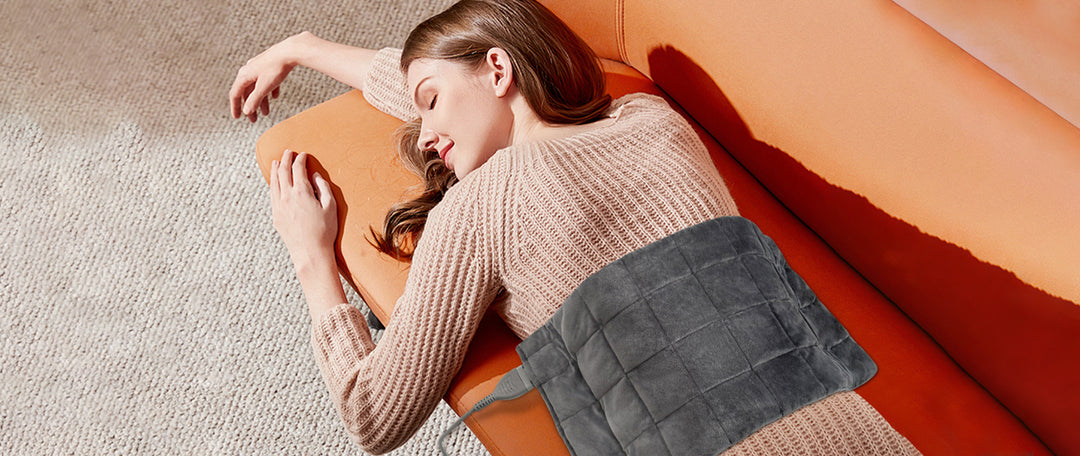
Yes, especially with unsupported posture. Using pillows or a weighted heated blanket helps maintain spine alignment and reduce stiffness.
Is sleeping on the couch a sign of depression?
Not necessarily. Habit, exhaustion, or convenience often explains it. Persistent fatigue, low mood, or daily functioning changes could signal a need to check in on mental health and consider professional advice.
Can sleeping on a couch cause nerve damage?
Rarely—but prolonged pressure on arms or legs can cause temporary numbness. Using pillows and a weighted heated blanket helps prevent this.
Can I sleep on the couch while pregnant?
Short naps are generally safe. Using pillows and a gentle, pregnancy-safe heating blanket reduces strain. Always check with a healthcare provider.
What's the best sleeping position?
Regularly sleeping in the wrong position can lead to pain, stiffness, and pressure point discomfort in the neck, back, and hips. Sleeping on my back with a supportive pillow keeps my spine aligned, while side sleeping can reduce snoring and acid reflux. I avoid stomach sleeping to prevent neck and back strain.
Does sleeping on a couch ruin it?
Sleeping on a couch occasionally won’t ruin it, but regular use can cause uneven cushion compression, sagging, and wear to fabric or springs. To protect it, I rotate cushions, use a thin blanket or topper, and avoid sleeping in the same spot every night for long-term comfort.


Leave a comment